
Real Estate  /  Rentals  /  Hotels  /  Professional Services Classifieds  / Garden  Restaurants / Tourism  / Culture & Lifestyle  /  Food   / Sports   / BusinessHealth /
Wild Costa Rica


The Poas Volcano has been emitting persistent columns of gas, rocks and ash.
Photo courtesy of the National System of Conservation Areas (SINAC).

Costa Rica Issues Alert At Poás Volcano


You Might
Also Like


Published on Wednesday, May 6, 2026
By the A.M. Costa Rica staff


The National Emergency Commission (CNE) has issued a Green Alert on Wednesday due to ongoing eruptive activity at Poás Volcano National Park in Alajuela province.
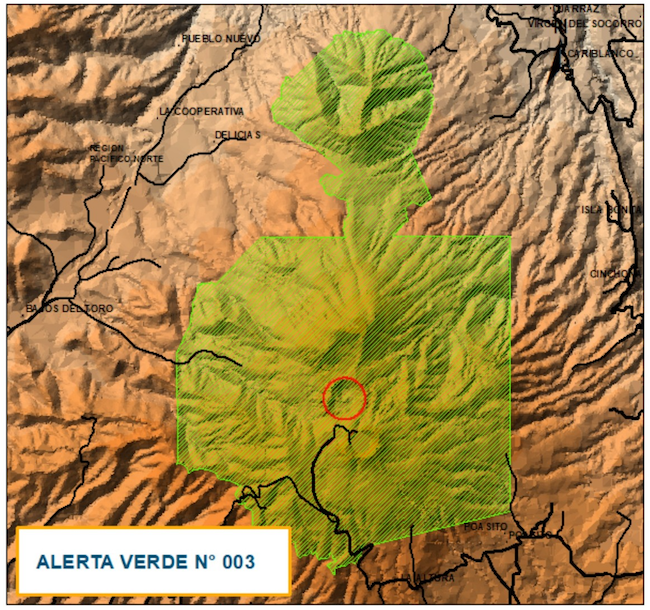


The first-level alert is intended to keep emergency teams informed and prepared for any changes in volcanic conditions.


According to the Volcanological and Seismological Observatory (OVSICORI), the volcano has been emitting persistent columns of gas, rocks
and ash. Low-frequency, sustained earthquakes also continue to be detected.


The alert allows experts to closely monitor increased eruptions, gas emissions, temperature fluctuations, seismic activity, ash fall, acid rain and hazardous gases.


Despite the activity, the national park remains open to visitors. Tickets must be purchased online in advance through the National System of Conservation Areas (SINAC) website.


The park covers approximately 16,000 acres, and its summit reaches about 8,900 feet. Visitors are typically allowed to walk to the edge of the main crater, depending on conditions.


The main crater, measuring about 950 feet wide, remains highly active, regularly producing geyser-like eruptions and occasional lava outbursts.


The park also features two smaller craters, Von Frantzius and Botos. The Botos Crater, known for its striking green lake, measures about 1,200 feet in diameter and is a popular tourist attraction.


In addition to its volcanic landscapes, the park is home to a diverse range of plant and animal species. Birdwatchers may spot the clay-colored robin, quetzals, hummingbirds, tanagers, flycatchers and toucans. Mammals found in the park include pumas, coyotes, rabbits and marmots, among others.


OVSICORI, a research institute at the National University of Costa Rica, monitors seismic and volcanic activity nationwide.


The CNE coordinates emergency preparedness and response efforts across the country.


SINAC is the government agency responsible for managing Costa Rica’s national parks and protected areas.


--------
What measures should Costa Rica take to ensure the safety of communities near Poás Volcano?
We would like to know your thoughts on this story. Send your comments to news@amcostarica.com


hotelrestaurant103017.jpg