 |
 |
 |
 |
 |
 |
 |
 |
 |
 |

|
||
 -Published: Wednesday, October 16, 2019- Rescuers
capture puma loitering in a Tárcoles neighborhood
By the A.M. Costa Rica staff Officers of the National System of Conservation Areas, with the support of the firefighters of the stations of Esparza and El Roble in the Province of Puntarenas, captured a female puma that was around the community of Tárcoles. According to Carlos Vinicio, one of the team members, the officers and firefighters answered the emergency call about the wild cat that was in a residential area. "It's an adult female wildcat that got caught in the yard of a house where some dogs were bothering her," said Vinicio. According to capturers, the animal possibly had left its habitat in search of food. The specialists sedated the animal to carry out several medical check-ups. "We did a full evaluation of her health condition," he said. The animal was released within the forest area of the Carara National park, which is located between the cantons of Turrubares and Garabito in the Province of Puntarenas. A similar situation happened in September, as A.M. Costa Rica reported, when the authorities of the Conservation Areas then warned about the recent sightings of wild cats in urban areas. 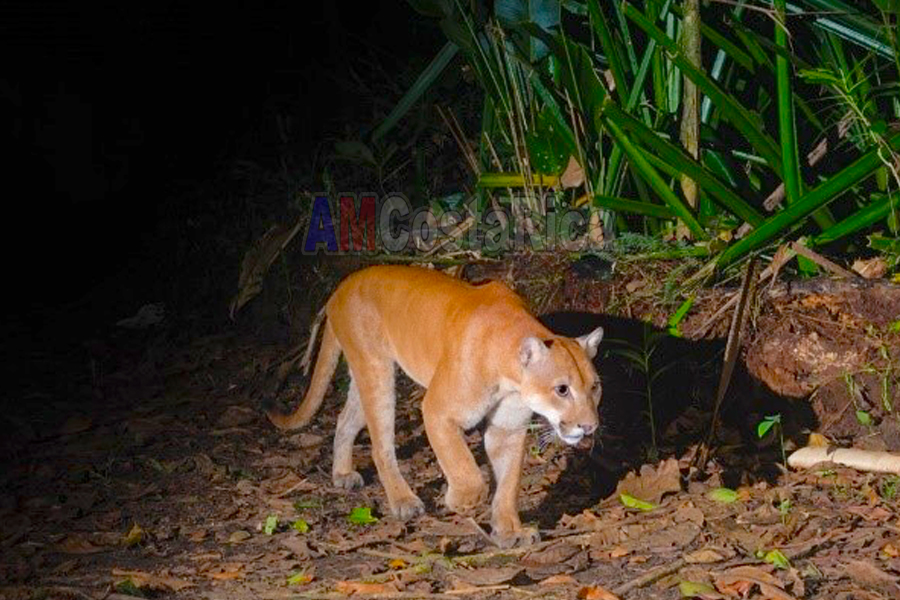 According to specialists, pumas have been recently reported traveling at night near a residential area, in the community of Escazú, in the Province of San José. Although the visit and detection of a wild cat in urban areas are somewhat rare, it is not entirely impossible. "The transit of the animal itself is not causing for alarm since the presence of these animals in an urban area is possible because the Central Valley is surrounded by protected wild areas," said the specialists. These wild animals can use the banks of rivers, lots, and farms as passageways, in search of prey. Wild cats feed on raccoons, foxes, and sloths, among other small animals. According to specialists, wild cats "are not dangerous to humans, because they prefer to go unnoticed, and when they encounter us, they flee." However, under certain circumstances, the transit of a wild cat in urban areas may compromise the safety of people or pets. This happens when people do not know the appropriate way to act when they see a wild animal. Because of this, specialists call on people to consider the following tips if they see a wild cat: 1. Keep calm. 2. Report the animal to 911. 3. Do not try to photograph the animal, follow it, scare it with sounds, sudden movements or throw objects at it. 4. Go indoors until specialists ensure the animal has left the area. 5. Notify the neighbors the animal is in the area. 6. To prevent animals from reaching urban areas, properly handle garbage to keep them from finding food. In March, the park rangers of Braulio Carrillo National Park, released the wild cat found in the town of Tibás in the province of San José. According to Pablo Vásquez of the that team, "it was a large puma. The animal comes right from the forest. What we did was anesthetize it and move it to a natural area where the animal can continue its life safely." The feline's capture operation was in the charge of firefighters officials, police officers, specialists o of Conservation Areas and the Ministry of Environment. In this case, the puma was a young adult male in the good physical condition and completely wild. Once the animal was anesthetized, blood and tissue samples were taken for DNA and disease analysis. He was checked for parasites, and a satellite collar was attached so he could be tracked after his release in the Braulio Carrillo National Park. ------------------------ Have you seen any wild animals traveling through your community? We would like to know your thoughts on this story. Send your comments to news@amcostarica.com |
    |
|
...
      |
