
  The decree allows for the creation of a category for the vaccines against covid-19 produced by the companies Pfizer / BioNTech and AstraZeneca, due to the national health emergency caused by the pandemic. - Pfizer photo - |
|||
  
   |
 Published Friday, December 18, 2020 New
decree advances import
of vaccines against covid-19 By the A.M. Costa Rica staff To accelerate the importation of vaccines against covid-19, President Carlos Alvarado and the Minister of Health, Daniel Salas, signed Decree No.42751-S, which modifies and updates the regulations for the importation of the vaccines that haven't been registered before. "This decree is another very important step in the vaccination process since it is part of the preparatory logistics that will allow timely access to high-quality vaccines," President Alvarado said. The rule allows for the creation of a category for the vaccines against covid-19 produced by the companies Pfizer / BioNTech and AstraZeneca, due to the national health emergency caused by the pandemic. The order also regulates the authorizations for the acquisition of medicines that had not been previously registered by Social Security or any other state entity. This week, the Ministry of Health authorized the use of the Pfizer-BioNTech vaccine against covid-19, based on the recognition of the authorization for emergency use from the U.S. Food and Drug Administration, FDA, kicking off the mass vaccination campaign expected to begin in the first half of 2021. In October, the government has signed an agreement for the purchase of the vaccine against covid-19, with Pfizer-BioNTech for three million doses. The cost of the purchase has not been disclosed due to a commercial confidentiality agreement between the companies, the government said. Also, the government signed an agreement with the British-Swedish multinational pharmaceutical and biopharmaceutical company AstraZeneca to buy one million doses of its vaccine, AZD1222, developed together with the University of Oxford in England. In the case of this vaccine, the government confirmed that each dose will be priced at $4, so the estimated price of this purchase is at least $4 million, without including additional distribution costs. The government joined the COVAX-Facility program coordinated by the World Health Organization for two million doses, where the first advanced payment of $6,316,560, or 30% of the cost, was scheduled to be made in October, the government said in its statement. The payment is based on the $10.55 price tag set by COVAX. The price includes factory costs, access, financing, risk mitigation and operating costs. Vaccine purchases would be made with funds from the National Emergency Fund that is being used to face the crisis caused by the pandemic. The vaccine would be administered in two sessions, meaning that one million doses would cover half a million people. These six million doses bought through the National Emergency Commission will protect three million people against covid-19, at two doses per person. The National Vaccination Commission will soon announce the beginning of the vaccination campaign as well as the population first to be vaccinated. Priority goes to high-risk populations such as the elderly, people with high-risk diseases, health workers and security forces who are at the front line of the pandemic. Social Security is leading the vaccination plan, currently in the development stage. The shipment for the vaccines against covid-19 is expected for delivery anytime between January and February. While the campaign has not started, covid-19 infections increase and deaths from the virus continue. On Thursday, the ministry reported the most up-to-date statistics on the evolution of the virus in the country, as follows: • 1,125 new covid-19 cases, bringing the total to 29,501 active cases. • 21,047 foreign-born people have been infected, totaling 156,388 cases since March, approximately 13.5% of the total cases. Of these, authorities confirmed the death of 32 foreign-born patients. But since October, there is no updated information about foreign-born deaths due to covid-19. • 610 patients are being treated in public hospitals, where 243 patients are in ICU’s in delicate health conditions (ages range from 1 to 92-years-old). And 367 patients are in recovery rooms. Many of the remaining infected patients are quarantined in their homes. • 124,907 coronavirus patients have fully recovered, which is a 79% recovery rate of the total cases since March. • 450,021 covid-19 tests have been performed in Costa Rica since March, according to the Center for Systems Science and Engineering of Johns Hopkins University. • 1,980 deaths of people infected with covid-19, approximately 1.3% death rate of the total cases since March. Of these 746 women and 1,234 men. The ages range from a 9-year-old to a 101-year-old person. Readers can see the updated number of total patients in each district at the National Distance Education University on its Covid-19 Map. 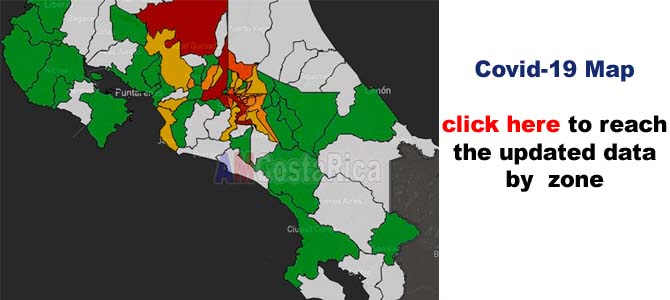 According to the Center for Systems Science and Engineering, CSSE, at Johns Hopkins University, the pandemic has killed 1,671,135 people worldwide. -------------------- How should the government disperse the vaccine against covid-19? We would like to know your thoughts on this story. Send your comments to news@amcostarica.com |
||
        
 |

|
|
 |
 |
 |
 |
 |
 |
 |
 |
 |