|
Your daily English-language news source
|
|
|
|
|
|
|
|
|
|
|
|
|
|
|
|||||||||||||
|
|
|
|
|
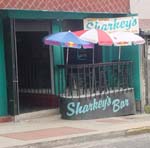
of the A.M. Costa Rica staff There’s a big anniversary coming up for Roger Crouse. The Canadian bar owner is facing the expiration of his second three-month period of preventative detention in a Liberia prison. That happens Saturday. Crouse is the Playas del Coco bar owner who shot a man who came to the bar and, said Crouse, threatened him with a knife. Generally this would be considered self-defense. But Crouse is being kept in prison because he is a foreigner who has structured his personal holdings so he does not appear to own anything, said his lawyer, Marilyn Jiménez of Liberia. Crouse, 50, a Canadian, shot and killed Miguel Villegas in his Gaby's Bar the evening of Aug. 19. The man had been in the bar earlier creating a disturbance, and police took him away only to free him and let him return to the bar two hours later. The lawyer said that the dead man was a well-known delinquent in the Coco area, and that Crouse ran afoul of the man because the bar owner singled Villegas out as someone who should be arrested during a civic association meeting on crime in the Pacific beach community. Villegas was a dangerous man who had a police record, said the lawyer. Still the family of the dead man has joined in the criminal action as is permitted under Costa Rica law. The family wants 50 million colons as compensation for the death ($145,000), the lawyer said. Crouse still is in jail, according to the lawyer, because Crouse is a foreigner, and although |
married to a Costa Rican, court officials
consider him a flight risk, and the Nicaraguan border is only a short distance
away.
Ms. Jiménez said she is trying to negotiate "conditional liberty" (i.e. bail) in the amount of 20 million colons ($58,000). Although Crouse is a businessman, everything he owns, including the bar and some fincas, is in the names of others. The bar, for example, remains in the name of the previous owner, she said. She said that to get out of jail Crouse either has to attach his name to his real estate and business holdings or put up the money in cash. She spoke with the permission of Crouse, who has been in telephone contact with A.M. Costa Rica over the past six months. Residents in Coco have said that they also fear the family of the dead man. The case is being handled in the court system in Santa Cruz. The lawyer said that the public prosecutor is not seeking the Costa Rica version of a premeditated first-degree murder charge. Instead, the charge is a lesser one of homocidio calificado. Killing in self defense is not a crime in Costa Rica if you can establish the facts. She said she seeks to open up a line of communication with the public prosecutor, the fiscal Olger León Contreras. Crouse has had at least five lawyers previously, and has complained that he had difficulty communicating with them because he does not speak Spanish well. The case might last as long as a year more before there actually is a court hearing. Unless he gets bail, Crouse would remain in his cell the whole time even if he is acquitted later. |
|
|
|
HOUSTON, Texas — The firm that wants to punch an exploratory oil well off the Caribbean coast near Limón now says the project is unlikely and that it will write off its investment. The company is Harken Energy Corp., which is based here. The firm said Tuesday that political and regulatory conditions in Costa Rica which have caused ongoing delays in obtaining the necessary permits for drilling the planned Moin offshore well are expected to continue. The project was awaiting a drilling permit from the Ministerio del Ambiente y Energia and an environmental permit from the Costa Rica environmental agency, SETENA. "All work, surveys and assessments necessary to request the issuance of the environmental permit were completed by Harken and its partner in this project, and filed in March, 2001," said Harken in a prepared release. The problem is that the Costa Rican Supreme Court issued an opinion in a suit filed against another oil and gas proposal and the energy ministry on land in the north of the country by certain environmental groups. In its opinion, the Supreme Court found among other issues, that the environmental agency did not have the legal right to grant environmental permits, said Harken. Due to the rulings, even though it did not directly involve Harken's project or the Moin well, Harken said it believes it is now probable that the environmental agency, in the wake of that ruling, will not in the near future issue the necessary environmental permit for this project. |
"These significant adverse developments,
combined with the previous continual delays in attempts to obtain the Moin
permits, have made further exploration of this prospect unlikely," said
the firm.
The firm will adjust its year-end 2001 earnings to reflect the decision, basically writing off the company’s current investment of $8.8 million. "We are very disappointed that these current developments including this court case in Costa Rica, the pending presidential elections wherein the primary candidates have all publicly stated positions against energy exploration in their country and the objections by various environmental groups appear to be creating enough impediments to this Moin well, that we now do not foresee this well being drilled in the near future." said Harken's chairman, Mikel D. Faulkner. "We intend to continue lobbying and pursuing any legal avenues available for a reasonable resolution to these impediments being raised against the project and for the issuance of the permits necessary to proceed with the project," he added. Harken Energy Corp. is an oil and gas exploration and production company that decided last year to concentrate its resources on exploration and development of its domestic properties in the Gulf Coast regions of Texas and Louisiana. However, Global Energy Development Ltd., a subsidiary of Harken is an internationally focused oil and gas exploration and production company with operations and/or acreage holdings in Panama, Peru and Colombia, in addition to Costa Rica. The projects were seen as a way for Costa Rica to become its own oil supplier instead of importing it. |
|
|
|
When you have a problem, you look for someone in government who can help you. That’s the general rule and very typical of how Costa Ricans get things done. But a U.S. citizen trying to get back his 3 1/2-year-old son from his Costa Rican ex-wife pulled out the big gun. Ralph Stumbo’s last place of residence was Florida. He was in a fit of frustration with how his case was being considered at the U.S. Embassy here and in the United States. So he dashed off an e-mail to the governor of Florida. The governor happens to be Jeb Bush, who also has a brother active in U.S. politics. Stumbo, who relishes the characterization "aggressive and sometimes abrasive," sent off a chronology of his custody battle to Bush. Less than 24-hours later he got a reply from the governor’s assistant who said she would start an investigation, said Stumbo. Stumbo wants to know why the F.B.I. and Costa Rican police are not working on his case if his wife fled to Costa Rica contrary to judicial order that mandates the son remain in Florida. He got part of the answer Tuesday, he said. The Collier County, Fla., Sheriff’s Department apparently bungled the paperwork and did not pass |
on a judge’s pickup order to proper
authorities, Stumbo said he learned. Therefore, federal police officials
never were contacted. If an investigation finds the evidence, the case
could be considered international child abduction, a federal felony.
The custody battle between Stumbo and his wife, Flor Gaitán Tejada, is complex. They have lived here and in cities in the United States. Their son was born in Texas. Stumbo was arrested last July in Naples, Fla., on what he said was a groundless complaint of domestic violence. A few days later, Ms. Gaitán took the son back to Costa Rica. A judge’s order that Stumbo had prohibits this, but Ms. Gaitán said two weeks ago that she never was served with the order and that she was told by a legal aid lawyer in Florida to return to Costa Rica. Stumbo has been masterful in mounting a public relations campaign to sway public opinion in his favor. But he has been helped because he has touched on a critical issue, Costa Rica family law and the way foreign spouses are treated by the system. He formed an organization, the North American Consul for Justice, and said that he has had a handful of U.S. citizens contact him because they had the same problem. Stumbo claims that the U.S. Embassy has been footdragging on his problem and some of the other cases. The Embassy counters that it must work locally within the framework of Costa Rican law. |
| What we published this week: | Monday | Tuesday | Wednesday | Thursday | Friday | Earlier |
|
|